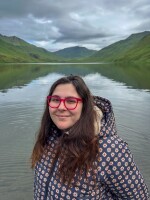
Luke Moloney and his crew lost control of his sailboat, the Mizuya, about 950 miles southwest of Adak Island on June 18. They were rescued in an international Coast Guard effort, and the 40-foot trimaran was left adrift. But Moloney wasn’t willing to abandon his sailboat, so he went back to find it.
Moloney lived aboard the Mizuya for the past year while sailing around East Asia. In early June, he and two crew members set out from Gamagori, Japan bound for Prince Rupert, British Columbia. Ten days into the voyage, the sailboat lost its rudder, and they couldn’t steer anymore.
“If you can't steer a boat, then you can't put the nose into the waves. You can't go anywhere,” Moloney said. “So I took the sails down, secured the boat, and then evaluated what to do.
Then a storm hit with 12-foot seas, and the Mizuya was getting knocked around.
“It was very uncomfortable, but I didn't know how long the boat could survive just bashing sideways to the waves,” he said. “My sea anchor wasn't holding the nose into the waves.”
Moloney made the call to get his crew off the boat.
Relaying a message through another vessel’s satellite phone, he reached the U.S. Coast Guard. The Canadian ship Sir Wilfrid Laurier was already in the region and sailed more than 575 miles to rescue them, a trip that took about 40 hours.

According to the Coast Guard’s Arctic District, which covers Alaska, crews ran 575 search-and-rescue cases in 2025. Of those, 51 involved a vessel disabled or adrift.
Moloney and his crew were handed off to the Japan Coast Guard and taken back to Japan. Everyone was safe. But the Mizuya was left behind, adrift in international waters.
“When a boat is adrift in international waters, then, as I understand it, anybody who takes it, it's their boat,” Moloney said. “So I wanted to make sure that I got it first.”
Moloney said his insurance doesn’t cover salvage at sea, so if someone else were to get the Mizuya, he’d have to buy it back.
Moloney said he didn’t have long before someone could take his sailboat. He said the publicity around the rescue got people talking online about where the boat was and how to get to it.
“It's dangerous waters where this boat is. It's really remote. It's really cold,” Moloney said. “If some greenhorns go looking for it and don't find it, they could get into trouble.”
Moloney flew from Japan to Unalaska as quickly as he could. He hired the marine-salvage company Resolve Marine to take him and his friend to the Mizuya. Once they were near the general vicinity of the sailboat, he said they searched for four days in thick fog, trying to find where the sailboat had drifted.
But they found it. After two weeks of leaving it behind, Moloney said the Mizuya was in good shape.
Moloney said he and his friend fixed the mechanical failure in a few hours, using replacement parts he’d brought, and got the Mizuya sailing again.
They traveled to Adak, waited for a break in the weather, and headed to Unalaska to begin the original voyage again.
“It’s almost the best case scenario,” Moloney said. “We found the boat; it wasn't seriously damaged. We were able to fix it, we were able to get it sailing, and we had favorable weather.”
Moloney recalls the whole experience as “level three fun” — the kind that’s pure suffering in the moment, not much fun to look back on either, but could be a wild story someday.