

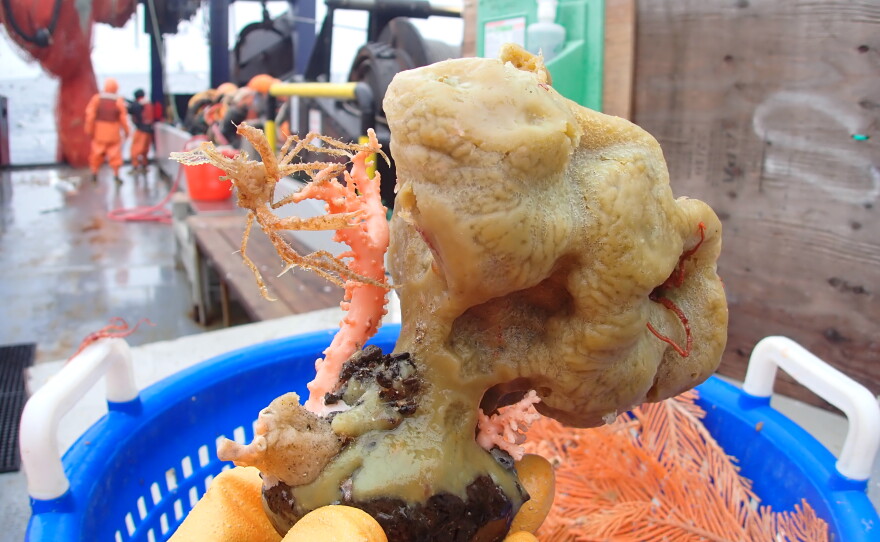
This summer, researchers announced the discovery of nine new species of deep-sea sponges off the coast of Alaska. Five of them were found in the Aleutian Islands.
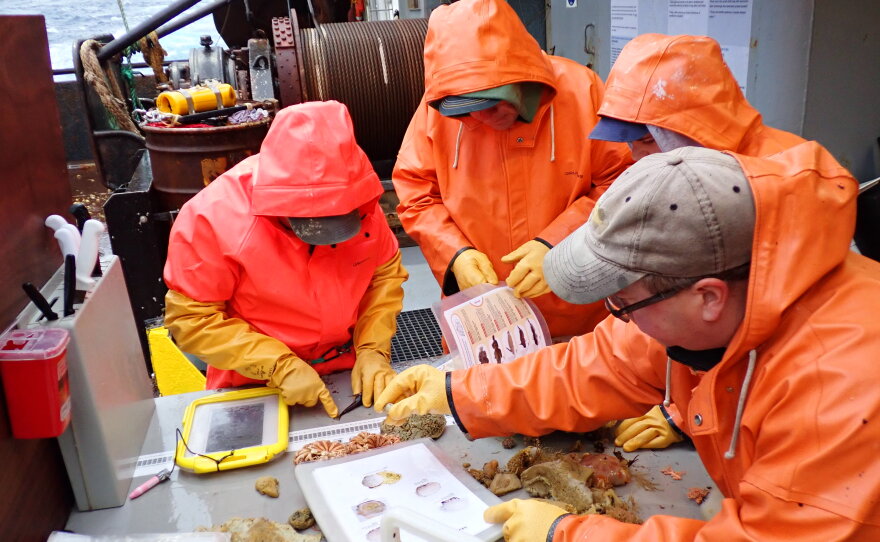
Sean Rooney is a fish biologist with the National Oceanic and Atmospheric Administration’s Alaska Fisheries Science Center. As part of NOAA’s Groundfish Assessment Program, he and his team conduct bottom trawl surveys to gather information about fishery stocks.
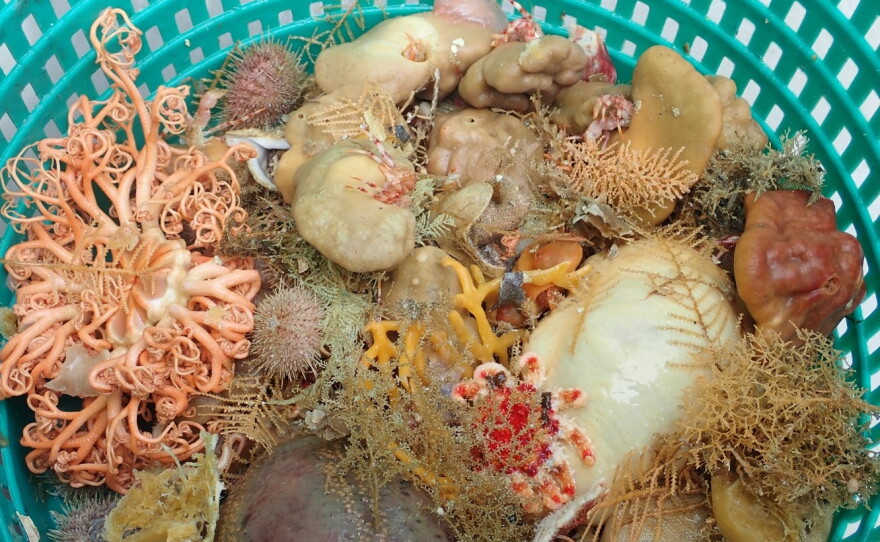
Those trawls scoop up a variety of sea life, including sponges.
“Sponges are basically the structural backbone of the seafloor,” Rooney said. “Think of them as underwater forests.”
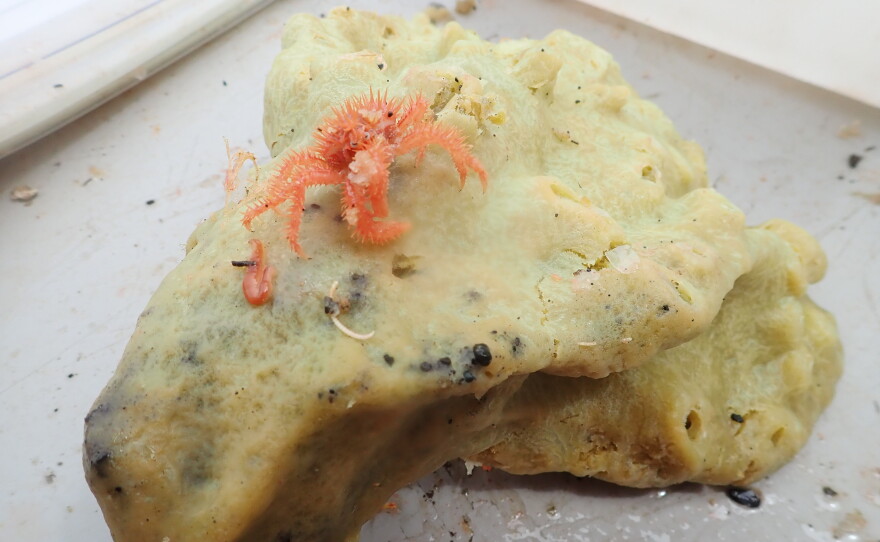
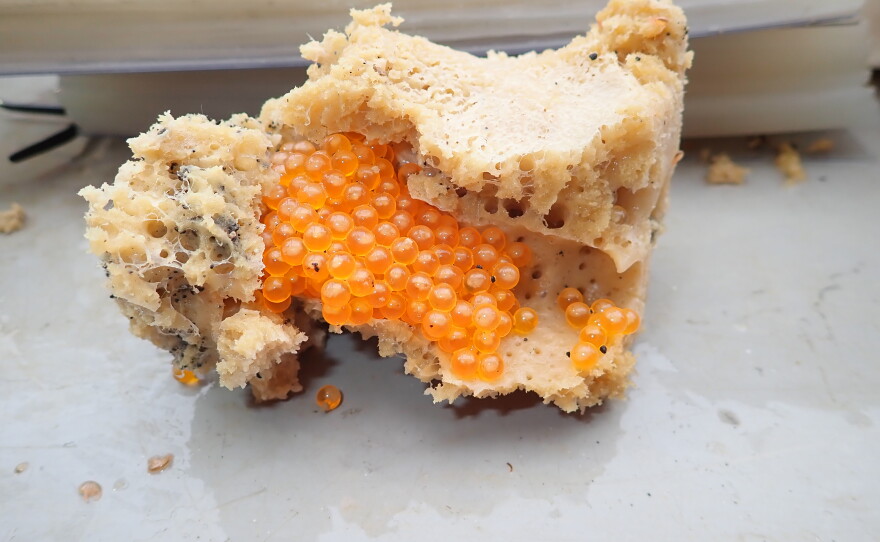
Sponges are animals without brains or organs. According to Rooney, they play important roles for groundfish and crab, like providing shelter, protecting eggs, and concentrating food sources. Their natural defense chemicals may even have medical benefits for people.
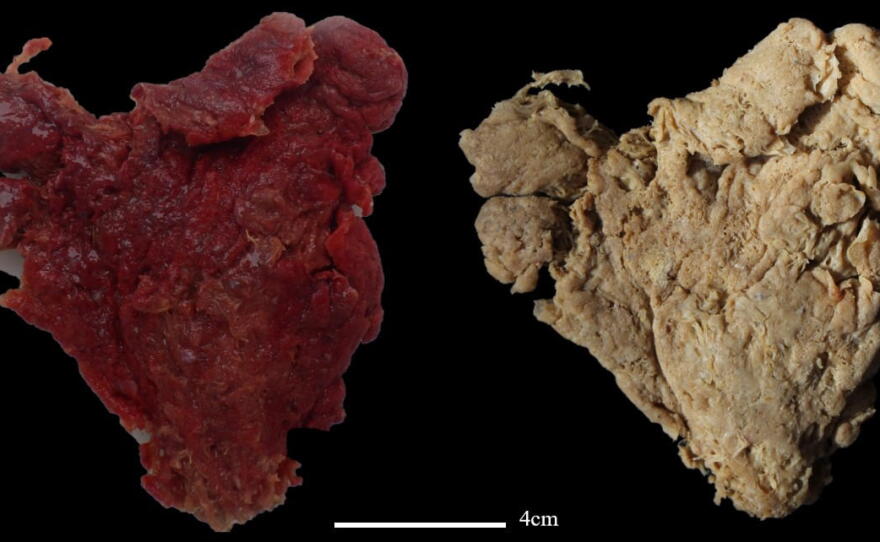
This summer, Rooney and his co-authors published two studies in the journal Zootaxa. They classify nine new species of sponges taken from trawl surveys as far back as 1997.
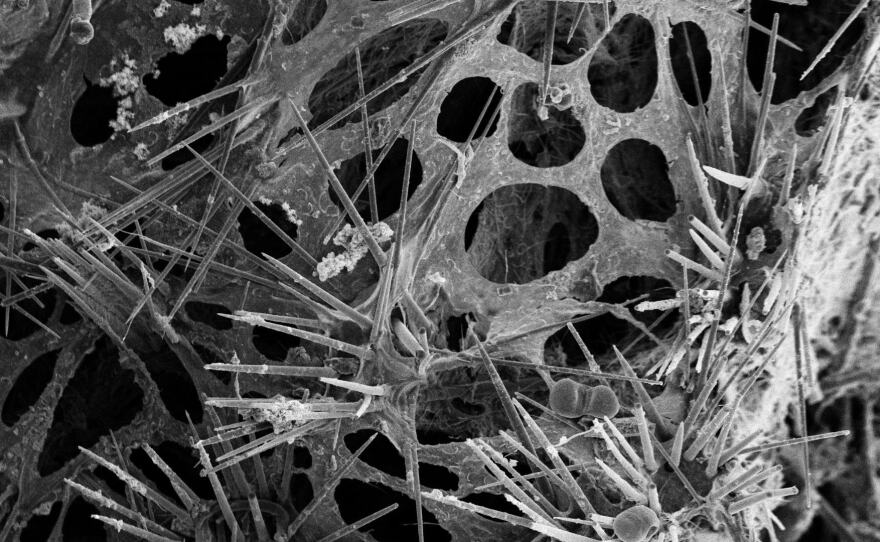
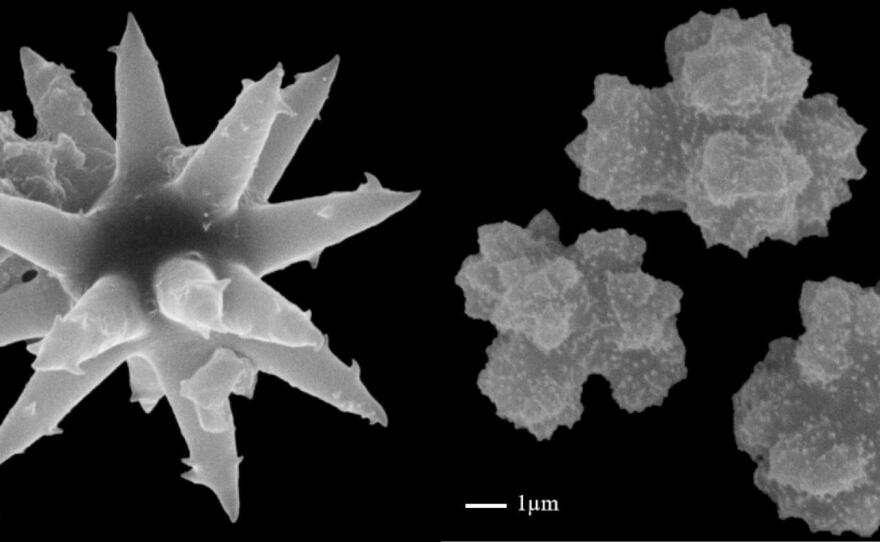
Rooney and his collaborators spent the past few years working to identify these sponges. They used microscopes to examine the sponges’ skeletons, which are made of intricate needle-like structures called spicules, and they took DNA samples to further classify the sponges.
“Back in the old days when they only looked at spicules, they were able to say, ‘Oh, we think the relationships are this to this,’” Rooney said. “But now, with genetics, you can get a much better resolution.”
There are now 232 known sponge species in Alaska, with the Aleutian Islands recognized as a global hotspot for sponge biodiversity.
Rooney said the information collected through trawl surveys provides an important starting point for managing sustainable fisheries.
“You can’t protect or manage something you haven’t named or identified,” he said. “And so, by naming and identifying these species, it really provides essential spatial data to map these fragile sea floor habitats.”
Rooney said the information can also be used by resource managers to protect critical fish habitat.


